Materials & Sleep
What Organic Mattress Certifications Tell You About Materials
A mattress label can offer a useful map of what is inside a bed—but no single mark tells the whole story. Understanding which materials were certified, what processing was assessed, and whether the claim applies to the finished product helps turn organic language into informed questions.
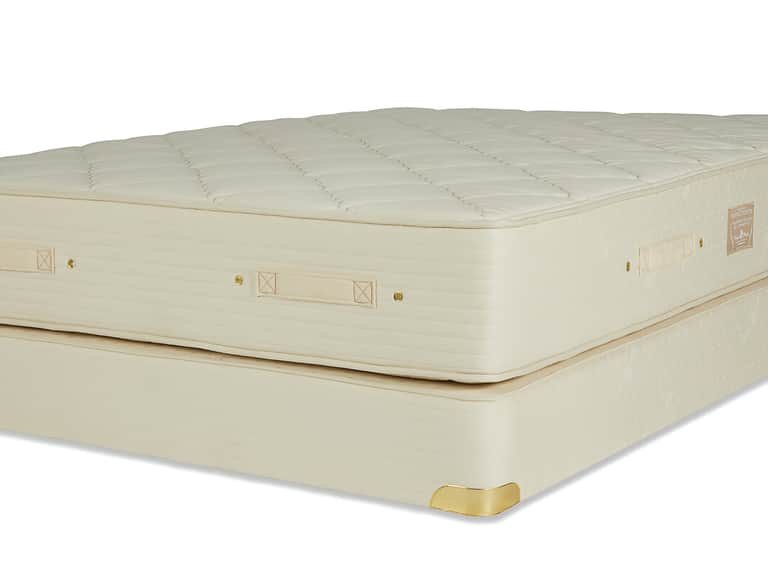
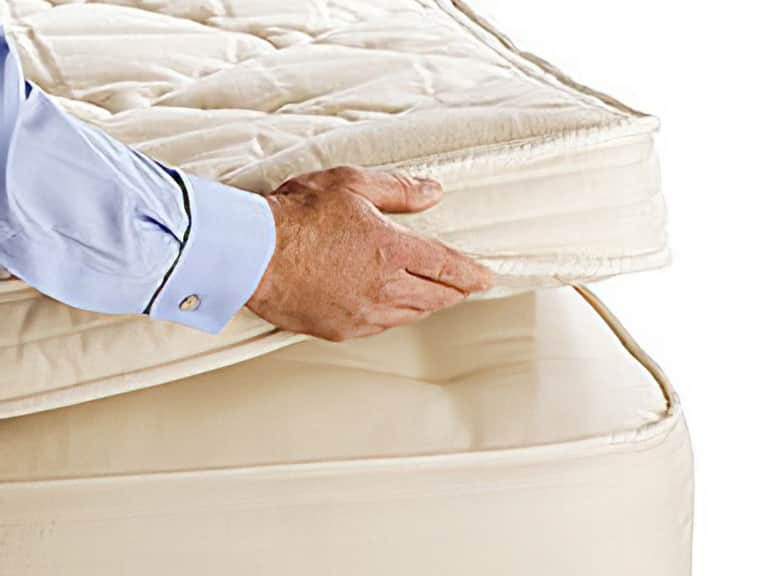
A mattress is a layered landscape. Cotton may form the outer fabric; wool may sit beneath it; latex or other materials may provide the core. Each layer has its own source, manufacturing route, and role. When a label calls the finished bed “organic,” it is natural to wonder whether that description applies to every component, only some of them, or a particular material with a verified supply chain.
Certifications can help answer that question, but they are not interchangeable. Some standards focus on how agricultural fibers are grown and processed. Others assess chemicals, emissions, or environmental and social practices at different stages of production. A certification associated with one ingredient does not automatically certify every layer—or establish every possible claim about safety, durability, comfort, or environmental impact.
The most useful approach is to treat certification as evidence with a defined scope. Read the name of the standard, identify the material or component it covers, and then compare that information with the mattress’s construction details. The goal is not to collect labels. It is to understand what they verify, what remains uncertain, and what to ask before choosing a mattress.
Why mattress labels need careful reading
The word organic describes a production approach, not a single universal mattress recipe. In many cases, the term refers to agricultural materials such as cotton or wool grown under a particular standard. It may also appear in a product’s name or marketing description, even when the mattress contains several materials with different origins and certifications.
A finished mattress can include a textile cover, quilting, comfort layers, adhesives, barriers, and a support core. A brand might document the organic status of its cotton while using other materials that are assessed under separate standards—or that are not part of that certification’s scope. This does not, by itself, make the product misleading. It means the label should be interpreted precisely rather than expanded into a claim it does not make.
Ask a basic question first: What exactly is certified? The answer may be a fiber, a batch of material, a component, a facility, a manufacturing process, or a complete product. Those are different things. A certification statement is most informative when it identifies the covered material and makes clear how it relates to the mattress being considered.
Raw-material certification and finished-product standards
A raw-material certification generally addresses a specific input and the rules governing its production or handling. For example, an agricultural standard may set requirements for how a crop is grown and how its fibers are processed through defined stages. Such a certificate can provide traceability and help distinguish a verified material from an unsubstantiated claim, but it does not necessarily evaluate the mattress as a whole.
A finished-product standard has a broader or different focus. Depending on the program, it may assess the final item against criteria relating to chemical content, emissions, or manufacturing practices. Even then, readers should check the standard’s published scope. A finished-product certification may evaluate a particular set of substances or requirements; it should not be taken as proof of every conceivable health, environmental, or performance attribute.
These distinctions matter because materials pass through multiple hands. A fiber can be grown under an agricultural standard, converted into yarn and fabric, treated or finished, assembled into a mattress, and sold under a brand name. Different standards may apply to different links in that chain. Certification is therefore less like a single seal of total approval and more like a series of checkpoints, each with its own boundary.
- Material-level evidence can help establish the origin or handling of a named fiber or ingredient.
- Process-level evidence may address specified stages of manufacturing or processing.
- Product-level evidence can apply requirements to a finished item, but only within the standard’s stated criteria.
- Brand claims are not certifications by themselves; look for the standard name and the documentation that supports the claim.
What common certification language may indicate
Mattress listings often combine several kinds of language: certified organic, natural, low-emission, chemical-conscious, responsibly sourced, or made without particular substances. These phrases do not mean the same thing. Some may refer to a formal third-party standard; others may be descriptive claims made by a manufacturer. The exact wording, the named certifier, and the documented scope all matter.
For agricultural fibers, a recognized organic textile standard may address more than the original farm. Depending on the standard and its version, requirements can extend to specified processing stages, chain-of-custody records, and restrictions on certain inputs. A certification logo, however, should still be connected to a clear claim: which fiber is covered, what portion of the item it represents, and whether the scope includes processing or only an earlier stage.
Other standards may focus on chemical screening or emissions from a finished product. These can be relevant to people who are researching indoor air quality or material transparency, but they are not equivalent to organic certification. A product might meet an emissions criterion without being made from certified organic materials, or contain certified organic cotton while relying on a separate standard for another aspect of its construction.
When a company lists a certification, look for the issuing organization and, where available, a certificate number, product listing, or scope document. Standards can change, and a mark may apply to a product family, facility, or input rather than every finished mattress sold under a brand. Clear documentation is more useful than a cluster of unexplained logos.
A layer-by-layer way to assess an organic mattress
Start with the construction description. Instead of relying on a headline, make a simple inventory of the mattress’s layers and materials. Note the cover fabric, quilting, comfort layers, core, and any fire barrier or bonding materials that the manufacturer identifies. If a component is not described, that is a useful point to clarify rather than a reason to assume either the best or the worst.
- Identify the material. Is the layer cotton, wool, latex, foam, or a blend? Is the name of the fiber or material specific enough to compare?
- Locate the claim. Does the certification apply to that material, to its processing, to a component, or to the complete mattress?
- Check the standard. Find the full name of the certification and its current scope rather than relying on an abbreviated logo or marketing phrase.
- Ask about blends. If a layer contains multiple fibers or materials, ask whether the certification covers all of them or only a stated portion.
- Separate sourcing from performance. Certifications may explain sourcing or processing, but comfort, support, durability, and suitability still depend on construction and individual needs.
This method is especially useful when comparing mattresses with different designs. Two products may both use organic cotton, for example, yet differ in the thickness of that layer, the materials beneath it, the way the mattress is assembled, and the standards used for other components. Certification helps describe one part of the comparison; it does not settle the entire decision.
A closer look at cotton, wool, and latex
Cotton
Cotton may appear in a mattress cover, quilting, or another textile layer. When a brand describes cotton as organic, ask what certification supports the claim and whether it covers the cotton used in the particular product. The amount and location of the cotton can also matter for understanding construction: a certified cover fabric is not the same as a mattress made entirely from certified materials.
Wool
Wool is sometimes used in quilting or as part of a mattress’s fire-barrier design. Claims about wool can refer to its agricultural source, its treatment, or its function in the product. Terms such as “natural” and “chemical-free” can be broad, so ask the manufacturer to explain what they mean and which processes or materials are included. A certification connected to wool should be read according to its own criteria, not as a blanket statement about the full mattress.
Latex
Latex descriptions may refer to natural latex, synthetic latex, or a blend. The material’s origin and the way it is processed are separate questions, and a claim about one does not answer the other. If a mattress contains latex, ask what type is used, which layers contain it, and whether any certification or documentation applies to the latex itself or to the finished component.
A product description might list natural latex, cotton, and wool together, but a list of materials is not automatically a list of certified materials. When reviewing brands such as Naturepedic, use the same neutral checklist you would apply to any maker: identify the stated materials, look for the specific standards and their scope, and consult the brand’s documentation for the exact product and configuration. Brand recognition is not a substitute for checking the evidence.
Questions worth asking a manufacturer
A concise question can often reveal more than a long marketing description. Customer-service teams may be able to provide a materials breakdown, explain which certifications apply, or direct readers to current documents. If a response uses broad terms without identifying a standard or covered component, follow up with a more specific question.
- Which materials in this exact mattress are certified, and which are not covered by that certification?
- Does the certificate apply to the raw material, a processed textile, a component, or the complete finished mattress?
- Are any layers blends? If so, what materials are combined, and what portion does the certification cover?
- Can you provide the full standard name, certificate details, or a link to the relevant scope documentation?
- What materials are used in the cover, quilting, comfort layers, core, and fire barrier?
- Do different sizes or configurations use different materials or certifications?
These questions are not an interrogation. They are a practical way to distinguish a verifiable claim from a general impression. A manufacturer that explains limits as well as strengths gives readers a more useful basis for comparison.
What certifications do not tell you
A certification is not a guarantee that a mattress will feel comfortable, suit a particular sleep position, remain supportive for a specific number of years, or resolve a health concern. Those questions involve construction, use, individual preferences, and sometimes professional advice. Certification may offer relevant evidence about a defined material or process, but its scope should not be stretched beyond the rules it assesses.
Nor does the word “organic” alone establish that a product has no environmental impact. Growing, processing, shipping, assembling, using, and disposing of materials all have consequences. A certification can support transparency around particular practices, yet a complete environmental assessment would need to consider much more than one fiber or logo.
Likewise, “natural” is not synonymous with certified organic, and “chemical-free” is often too broad to be meaningful without an explanation. All physical materials consist of chemicals; in product discussions, the phrase may be intended to refer to specific substances or treatments. Ask what is being excluded, how that is verified, and whether the claim applies to the whole mattress or only a named component.
Building a balanced comparison
Once the label language is clear, place it beside the practical details that shape daily use. Consider firmness, pressure relief, temperature feel, motion transfer, mattress height, foundation compatibility, care instructions, warranty terms, and the retailer’s trial or return policy. These factors do not replace material transparency; they help put it in context.
It can help to create a small comparison table for the options under consideration. Record each mattress’s materials by layer, the certification attached to each claim, the certifier, and any unanswered questions. A concise record makes it easier to spot where two products genuinely differ and where similar words conceal different scopes.
The best choice is not necessarily the mattress with the largest number of labels. It is the one whose construction, documentation, comfort characteristics, and price fit the reader’s priorities—and whose claims can be understood without guesswork.
A clear-eyed reading of the label
Organic mattress certifications are most valuable when they make a complicated supply chain easier to see. They can identify how certain materials were sourced or processed, or show that a finished item was evaluated against a defined set of requirements. They cannot, on their own, answer every question about a mattress’s composition or performance.
Read the claim at the scale at which it was made: fiber, component, process, or finished product. Confirm the standard, examine its scope, and ask for the layer-by-layer details that connect the certificate to the bed. With that habit, labels become neither magic seals nor meaningless decoration, but one useful part of a careful, evidence-informed choice.