Sleep & Bedroom Design
How Wool Layers Shape Temperature Comfort in Vispring Bedding
A bed is a small climate system. Under the sheet, fibers absorb and release moisture, fillings compress and recover, and warmth gathers or escapes as the night unfolds. Wool’s role in Vispring bedding is not simply to make a mattress feel warm: it is part of a layered construction that can influence cushioning, humidity, and the way a sleep surface feels across changing conditions.
Published October 17, 2026
A material that works in layers
Wool has occupied a place in bedding for generations, valued for its resilience and its capacity to take up moisture. In a mattress, however, it is not a single-purpose ingredient. Its contribution depends on where it sits, how much is used, how it is prepared, and what materials surround it. A thin wool layer near the sleep surface may contribute a different feel from wool placed deeper in the upholstery, where it works alongside other fibers and the support system beneath.
That distinction matters when considering Vispring bedding. A mattress is a composite environment: ticking, natural fillings, springs, and the layers added above it all meet in a confined space. The experience of temperature comfort emerges from their interaction, not from one fiber acting alone. Wool may help manage moisture and lend springy cushioning, but it cannot promise that every sleeper will feel cool or warm in the same way.
People experience heat differently. Room temperature, humidity, bedding weight, sleepwear, activity, and individual physiology all shape how a bed feels. The same mattress can seem comfortably temperate in one bedroom and too warm in another. Understanding wool’s properties offers a practical starting point—not a guarantee, but a way to make more informed choices about the sleep environment.
What wool does with moisture and warmth
During sleep, the body releases heat and moisture. Some of that moisture moves into sleepwear and bedding; some remains in the air around the sleeper. Wool fibers can absorb water vapor within the fiber structure while still feeling comparatively dry to the touch. That ability can influence the sensation of dampness at the surface, particularly when the surrounding layers permit air and moisture to move.
This is one reason wool is often described as moisture-managing. The phrase should not be mistaken for a cooling technology or a promise of dry bedding under every condition. A fiber’s moisture behavior is only one part of the equation. Dense construction, a humid room, a waterproof cover, or several heavy layers may limit how readily heat and moisture escape. Conversely, breathable sheets and a well-ventilated bedroom can support a more comfortable overall arrangement.
Wool also offers natural insulation. Insulation slows the exchange of heat, which may help a sleep surface feel more even rather than sharply cold or hot. That can be useful across seasons, but it does not mean wool regulates room temperature. It does not replace ventilation, climate control, or personal adjustment. Its effects are best understood as part of the bedding’s local microclimate—the space between the body and the room.
Resilience is another feature. Wool fibers can provide a springy, compressible feel, contributing to the surface’s cushioning. In a mattress, that tactile quality may soften the first impression of the bed, while the underlying spring system and other fillings determine much of its support. Comfort is therefore layered in both a literal and a sensory sense: the surface meets the body first, but deeper materials shape how it responds over time.
Reading the construction of Vispring bedding
When evaluating wool in Vispring bedding, look beyond a simple label such as “natural” or “temperature regulating.” The useful questions are more specific: Where is the wool placed? Is it blended with other fibers? Is it close to the ticking or deeper in the mattress? What is the spring construction beneath it? How is the bed intended to be cared for, and what will be placed over it?
These details help explain why two mattresses containing wool may feel quite different. Wool combined with cotton, for example, will not create the same surface as wool paired with silk, cashmere, alpaca, or horsetail. The thickness and arrangement of each layer affect compression, airflow, and the sensation of cushioning. Construction is not a decorative footnote; it is part of the mattress’s behavior.
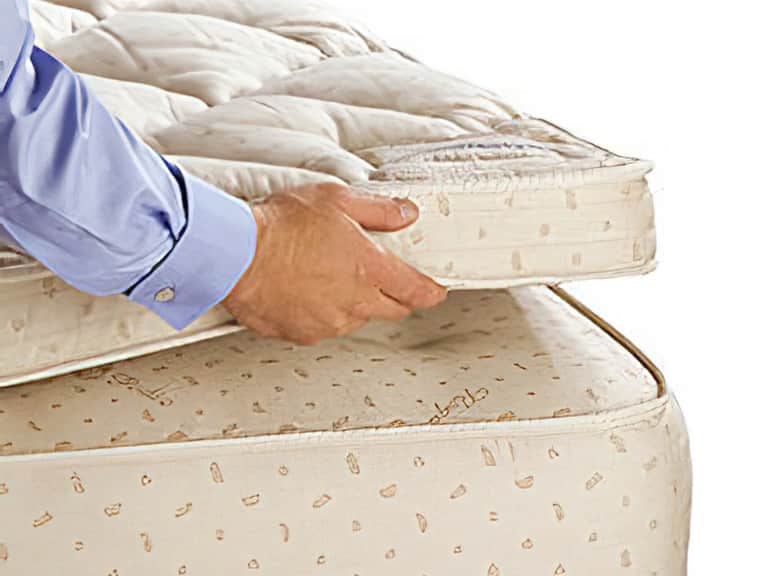
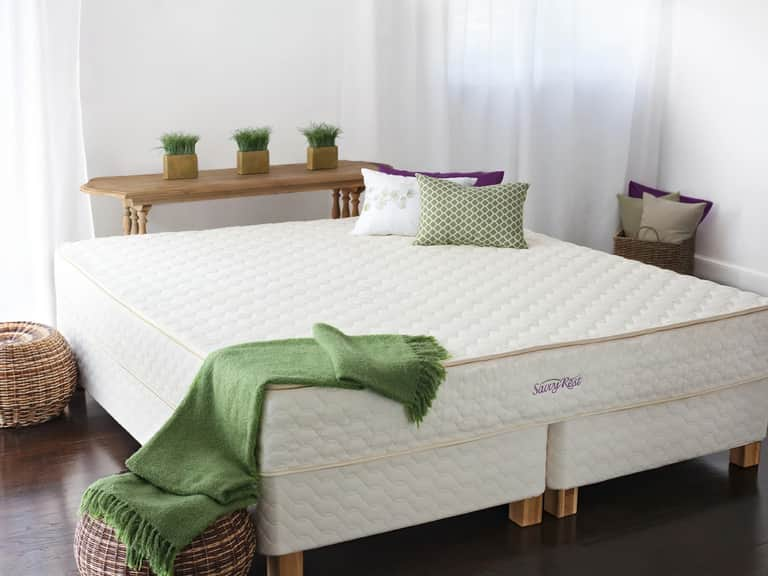
The Vispring Opulence Mattress provides a useful illustration of a layered approach. Its described upholstery includes real Shetland wool and cotton at depth, as well as other natural fibers in separate layers. The product description places mulberry silk and bamboo near the ticking, with cashmere and alpaca beneath, and hand-opened horsetail among the deeper fillings. It also describes a triple-layer hand-nested pocket-spring system. In this construction, wool is one element in a broader arrangement rather than the only material responsible for comfort.
Such an example should be read as a description of one particular mattress, not as a specification for every Vispring model. Materials, layer order, spring configuration, and dimensions can vary by model. Anyone comparing beds should consult the specifications for the exact model and configuration under consideration. A brand name alone does not tell the full story of a mattress’s filling or feel.
The importance of layer position
Position influences function. Materials close to the body shape the immediate surface sensation; layers farther down contribute to cushioning and the transition toward the support system. Wool placed nearer the top may influence the first touch and how the surface settles under pressure. Wool deeper in the upholstery may contribute to the character of the mattress without being directly felt as a distinct layer.
At the same time, layers do not operate as isolated sheets. A fiber can only exchange moisture and air within the limits of the construction around it. Closely packed upholstery, the mattress cover, a protector, and fitted bedding all affect the path heat and water vapor can take. If a breathable mattress is covered with a highly impermeable layer, for example, that covering may become a more significant part of the sleep experience than the material beneath it.
Spring construction also matters. Springs provide the central support system, while upholstery layers influence the contact surface and how the body settles. The result is a combined response: the spring unit gives, the fillings compress, and the cover holds everything together. It is more accurate to assess the whole mattress than to assume that one wool layer alone determines firmness, temperature, or pressure relief.
Sheets and protectors complete the system
The sheet is the layer most directly in contact with skin, so its weave and fiber composition can change the perceived feel of the bed. Cotton, linen, and blends each have distinct textures and care needs. A crisp, lightweight sheet can feel different from a heavier, smoother one, even on the same mattress. Seasonal bedding changes may make a more immediate difference to comfort than changing the mattress itself.
A mattress protector has a practical purpose: it helps shield the mattress from everyday soil and moisture. But its fabric and construction also influence the surface. A protector that is quilted or padded may add cushioning; a more tightly coated barrier may alter airflow and the tactile feel of the bed. When temperature comfort is a concern, check the protector’s materials and cleaning instructions rather than assuming that every protective layer behaves alike.
Keep the arrangement simple enough to understand. If a bed feels too warm, consider whether the cause could be a thick duvet, heavy sleepwear, a dense protector, or a warm room before attributing the sensation solely to the mattress. Change one factor at a time where practical. That makes it easier to notice which adjustment helps and avoids replacing useful bedding unnecessarily.
Mattress care also depends on the manufacturer’s guidance. Natural fillings are not necessarily washable, and a mattress cover that cannot be removed for laundering needs different protection from machine-washable bedding. Follow the care instructions for the specific product; avoid applying water, cleaners, or heat to mattress materials unless the manufacturer permits it.
Room conditions shape the night
A mattress does not create its own climate. The bedroom’s temperature, humidity, air movement, and exposure to sunlight all influence the conditions around the bed. A damp room can make bedding feel clammy, while a poorly ventilated room may allow heat to accumulate. Curtains, rugs, closed doors, and the placement of heating or cooling equipment can subtly affect the sleeping area.
Good bedroom design begins with observation. Notice whether the room feels stuffy at bedtime, whether morning sunlight warms the bed, or whether the mattress sits close to a heat source. Allowing air to circulate around the bed and airing the room when conditions permit can help maintain a fresher environment. These measures are simple, but they address the surroundings in which every bedding material must function.
Humidity deserves particular attention. Wool can take up water vapor, but it is not a dehumidifier and should not be expected to correct a persistently damp room. If condensation, musty odors, or ongoing dampness are present, investigate the room itself. Ventilation and appropriate building maintenance are more relevant solutions than adding another layer to the bed.
Care, longevity, and practical questions
Wool-containing bedding can require careful handling. The correct method depends on whether the wool is part of a mattress interior, a removable topper, or a washable accessory. Some items may be spot-clean only; others may have a removable cover with separate washing instructions. Always check the care label or the manufacturer’s guidance for the exact item. Avoid assuming that a natural material can be washed or dried in the same way as cotton sheets.
For a mattress, routine care usually begins with protection and a clean, dry bedroom. Use a compatible protector, wash removable bedding as directed, and respond promptly to spills according to the manufacturer’s instructions. Regularly check the bed’s support base and follow any recommendations about turning or rotating. Not every mattress is designed to be flipped, so do not reverse it without confirming that the construction allows it.
Wool’s resilience may help it retain a springy quality, but all upholstery materials respond to use. The surface can settle over time, and the degree of change depends on construction, care, and the pattern of use. A mattress should be assessed as a whole: changes in comfort may arise from the fillings, the spring system, the foundation, or even the pillow and bedding arrangement.
For shoppers, useful questions include:
- Which wool types or blends are used, and where are they placed?
- What other fibers are layered with the wool?
- How does the mattress’s support system work with the upholstery?
- What protector and foundation types are compatible?
- Which care steps are recommended, and which are not?
- Can the mattress be tried in the intended firmness or configuration?
These questions replace vague expectations with useful specifics. They also help distinguish a genuine fit preference from a feature claim. A mattress may contain carefully selected wool and still not suit every sleeper’s preferred firmness or sleeping temperature.
Finding a balanced sleep setup
There is no single ideal arrangement for every bedroom. A person who tends to feel warm may prefer lighter sheets, a less insulating duvet, and a protector that does not add much padding. Someone who feels cold may value a more enveloping bedding combination. These are starting points, not rules: comfort depends on personal preference and the room’s seasonal conditions.
When assessing wool layers, consider both the bed and the rest of the environment. A wool-filled mattress can contribute to a particular surface feel, but it cannot compensate for an overly warm bedroom or an unsuitable duvet. Likewise, a breathable sheet cannot change the underlying firmness of a mattress. Treat each choice as one part of a larger system, and adjust the component most likely to be causing discomfort.
For couples, differing preferences may call for a closer look at the mattress configuration and the bedding above it. Some mattress designs offer different firmness arrangements on separate sides, while sheets and covers remain shared. It can help to discuss temperature and pressure comfort separately: one person may want a cooler surface, while the other needs more cushioning. A thoughtful setup makes those needs visible rather than treating “comfortable” as a single universal sensation.
A measured way to think about wool
Wool’s place in bedding is best understood through its combined properties: it can provide resilient cushioning, absorb moisture vapor, and contribute insulation. The result depends on construction and context. Fiber type, layer position, density, the materials paired with it, the cover, the protector, and the room all shape the final feel.
In Vispring bedding, the presence of wool should therefore prompt a closer look at the mattress’s full material story. Find out how the layers are arranged, how they interact with the spring system, and what care they require. Then consider the simplest parts of the sleep environment—the sheets, duvet, room temperature, and airflow—that may be just as important to everyday comfort.
Good sleep design is less about chasing a single miracle material than creating a stable, comfortable setting. Wool can be one thoughtful part of that balance. Its value is not that it controls the night, but that, when properly understood and paired with suitable bedding, it can help shape how the bed feels as the room and the sleeper change around it.